
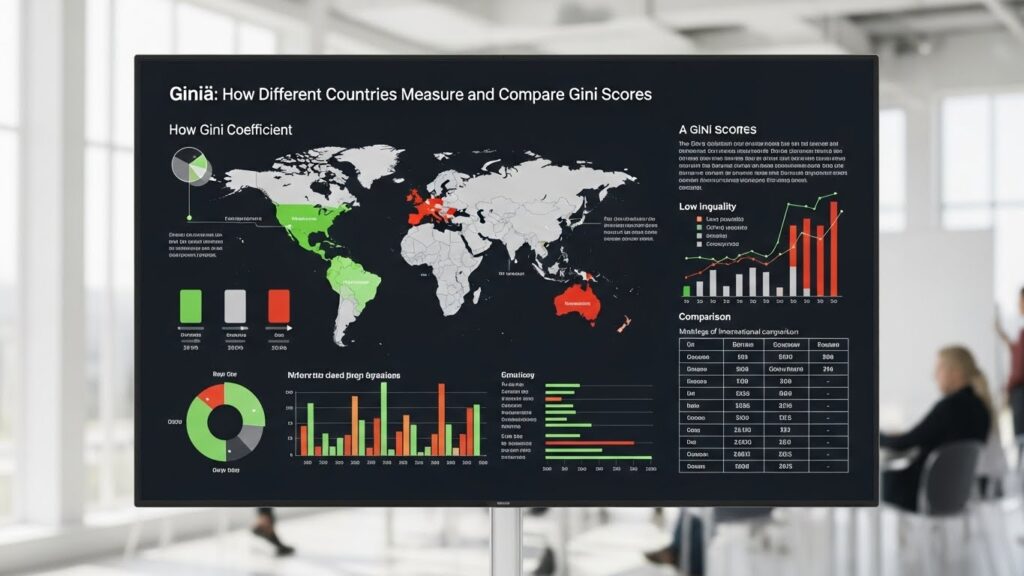
Income inequality is a pressing issue that affects countries around the globe. One of the most powerful tools for measuring this disparity is the Gini coefficient, often referred to simply as Giniä. This statistic provides insights into how wealth and income are distributed within a nation. But what does it really mean?
As we dive deeper into understanding Giniä, we’ll explore its calculation methods, advantages, and limitations. With some nations boasting high scores while others aim for low ones, it’s essential to grasp how these numbers reflect social and economic health. Join us on this informative journey as we unravel the complexities of Giniä and its impact on societies worldwide.
Understanding the Gini Coefficient
The Gini coefficient is a statistical measure that quantifies income inequality within a population. Ranging from 0 to 1, it provides a clear picture of how wealth is distributed among individuals or households in a country.
A score of 0 represents perfect equality, where everyone has the same income. Conversely, a score of 1 indicates extreme inequality, with one person holding all the wealth while others have none.
This metric allows policymakers and researchers to assess economic disparities more effectively. By comparing Gini scores across countries, we can identify trends and patterns in income distribution.
Understanding this coefficient sheds light on social dynamics and highlights areas needing attention for economic reform. As nations strive for balanced growth, the Gini coefficient serves as an essential tool in gauging progress toward equity.
How is it Calculated?
Calculating the Gini coefficient involves a straightforward mathematical approach. It considers income distribution within a population, illustrating inequality.
The formula is based on the Lorenz curve, which graphically represents wealth distribution. By plotting cumulative income against cumulative population percentages, we can visualize disparities.
To calculate the Gini score, you find the area between the line of perfect equality and the Lorenz curve. This area’s size compared to the total area under the line of perfect equality gives us a numerical value ranging from 0 to 1.
A score of 0 signifies complete equality—everyone has identical income—while a score of 1 indicates maximum inequality where one person holds all resources. Most countries fall somewhere in between these extremes, providing valuable insights into their economic landscapes.
Advantages and Limitations of the Gini Score
The Gini score provides a clear snapshot of income distribution within a country. It’s easy to understand, making it accessible for policymakers and the public alike. A low Gini index indicates more equal wealth distribution, while a high score highlights significant disparity.
However, this measure has its drawbacks. The Gini coefficient doesn’t account for factors like wealth inequality or regional disparities. Two countries can have similar Gini scores but vastly different living standards.
Additionally, cultural and social dynamics aren’t captured in raw numbers. Countries with high informal labor markets may present skewed results since not all incomes are formally reported.
While the Gini score is valuable for understanding economic health, relying solely on it can lead to oversimplified conclusions about societal well-being and equity.
Top Countries with High and Low Gini Scores
Countries showcase a wide range of Gini scores, reflecting their levels of income inequality. South Africa often ranks at the top with one of the highest Gini coefficients globally. Its historical and socio-economic factors contribute to stark wealth disparities.
On the flip side, countries like Denmark and Norway consistently report low Gini scores. Their robust welfare systems and progressive tax policies help distribute wealth more evenly among citizens.
Brazil also features prominently on the high end, where economic challenges exacerbate income divides. Conversely, nations such as Slovenia demonstrate effective measures that promote equity through education and healthcare access.
These variations highlight how different approaches can yield dramatically different outcomes in terms of income distribution across diverse regions. Each country tells its own story through its Gini score, revealing insights into societal structures and governance.
Factors Influencing a Country’s Gini Score
Several factors shape a country’s Gini score, reflecting its level of income inequality. Economic structure plays a crucial role. Nations with diverse economies often show lower Gini scores due to more job opportunities across various sectors.
Education levels also significantly impact income distribution. Higher education generally leads to better-paying jobs, reducing disparities among citizens. Conversely, limited access to quality education can exacerbate inequality.
Government policies matter too. Progressive taxation and social welfare programs can help redistribute wealth more equitably. Countries that prioritize these initiatives typically have lower Gini coefficients.
Cultural attitudes towards wealth and poverty influence perceptions of fairness in society as well. Societies that value equality may support reforms aimed at reducing income gaps.
Globalization introduces complexities by creating new economic dynamics within countries, sometimes widening the gap between rich and poor while offering opportunities for growth in other regions.
Challenges in Comparing Gini Scores Across Countries
Comparing Gini scores across countries is fraught with challenges. Different nations often have varying methods for data collection, affecting the reliability of their scores. Some rely on surveys, while others use tax records or administrative data.
Additionally, cultural factors play a significant role in income distribution. What might be considered an acceptable level of inequality in one country could be seen as extreme in another. This divergence complicates direct comparisons.
Economic structures also differ widely. Developed economies may exhibit different income distributions compared to emerging markets due to industrialization levels and labor market dynamics.
Furthermore, political systems influence economic policies and wealth distribution strategies, making it hard to draw simple parallels between nations.
These complexities mean that Gini scores are not always apples-to-apples comparisons; context is crucial for understanding what these numbers truly represent.
The Impact of Income Inequality on Economies and Societies
Income inequality significantly shapes both economies and societies. When wealth is concentrated in the hands of a few, it stifles economic growth. Limited access to resources for the majority means reduced consumer spending, which impacts businesses and slows down overall development.
Socially, high income disparity breeds dissatisfaction and unrest. Communities may fracture as divisions deepen between rich and poor. This can lead to heightened crime rates or increased political instability.
Additionally, educational opportunities often diminish for those at the lower end of the income spectrum. Without proper education, social mobility becomes nearly impossible. As generations struggle with entrenched poverty, entire communities face marginalization.
Healthcare also suffers in unequal systems; poorer populations frequently lack access to quality medical services. This not only affects individual well-being but ultimately burdens public health systems.
In essence, unchecked income inequality poses serious challenges that ripple through every layer of society and economy alike.
Efforts to Reduce Income Inequality and Improve Gini Scores
Countries are increasingly recognizing the need to address income inequality and improve their Giniä scores. Many governments have implemented progressive tax policies aimed at redistributing wealth more equitably among citizens.
Social welfare programs play a crucial role in this effort. By providing assistance such as unemployment benefits, healthcare, and education subsidies, nations can help lift lower-income households out of poverty.
Investments in education also stand out as a vital strategy. Access to quality education equips individuals with skills necessary for higher-paying jobs, ultimately narrowing income gaps.
Additionally, labor market reforms that promote fair wages and job security contribute significantly to reducing disparities. Encouraging businesses to adopt equitable pay practices fosters an environment where everyone has the opportunity to succeed.
International collaboration is another key component. Global initiatives focus on sharing best practices and resources among nations striving for greater equality through innovative solutions tailored to specific contexts.
Conclusion
Understanding income inequality is essential in today’s global landscape. The Giniä provides a valuable framework for analyzing the distribution of wealth within countries. By understanding how it’s calculated, we can appreciate its significance and limitations.
The varying Gini scores across nations highlight stark differences in economic equity. Countries with high scores face challenges that often lead to social unrest, while those with lower scores tend to enjoy more stable societies.
Several factors influence these scores, such as education access, labor market conditions, and government policies. Each country has unique circumstances affecting their Gini coefficient.
However, directly comparing Giniä values between different nations presents numerous challenges. Cultural contexts and local economies diverge significantly from one another—making it hard to draw straightforward conclusions based on numbers alone.
Efforts are underway globally to address income inequality through policy changes and community initiatives aimed at improving opportunities for all citizens. Nations continue to strive toward reducing their Gini coefficients by fostering inclusive growth strategies.
Balancing wealth distribution remains an ongoing challenge but is crucial for creating fairer societies where everyone can thrive together. Understanding the dynamics of the Giniä not only informs us about current disparities but also guides future efforts toward achieving greater equality worldwide.